Learning how you work
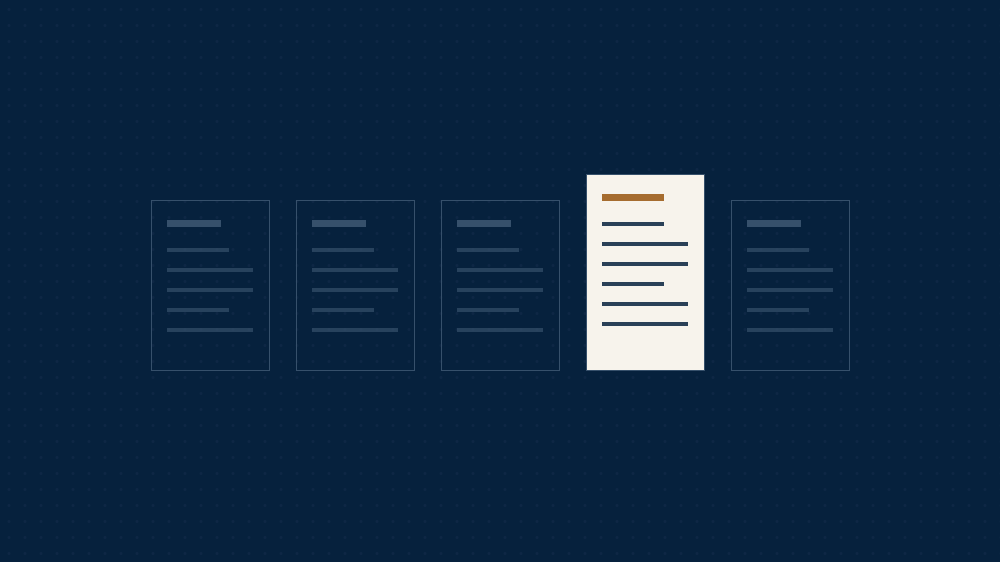
Every business has its own reasons for working the way it does, and most of them are good ones. So it begins with the people closest to the work, and with what actually happens day to day rather than what the process document says. Out of that comes what needs changing, what could be simpler — and the parts I would leave alone.
Charting the path → Delivering results you can measure
Technology, automation and AI applied to real operational work, not pilots that go nowhere. What the work costs today is recorded before anything changes. That is the baseline, so the difference shows up in practical terms — less friction, more capacity, and a return you can measure.
Reclaiming capacity → Connecting what you already run
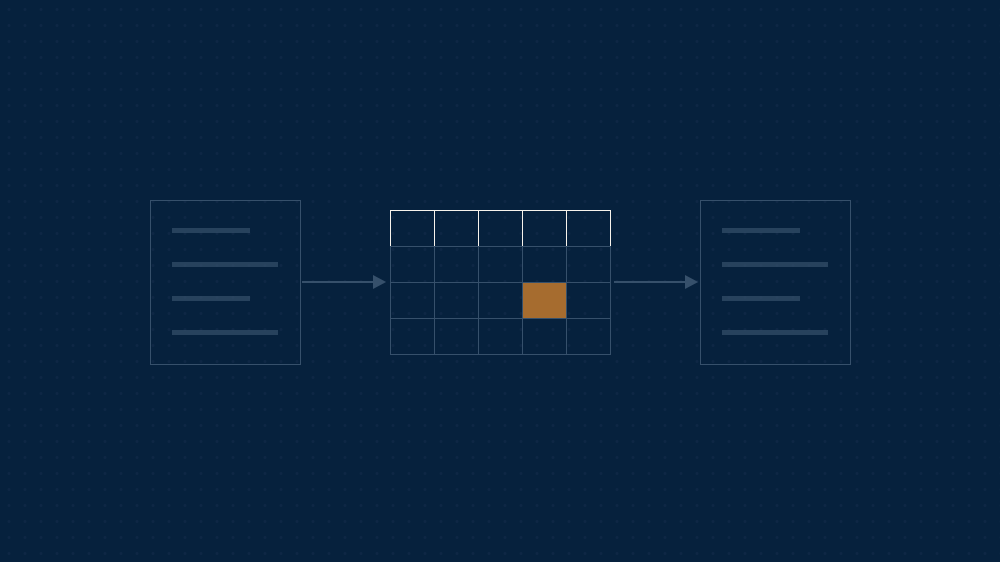
Knowledge, workflows and data brought together, so nothing important falls between the tools. Email and documents, finance, the CRM, the spreadsheet quietly holding two systems together — joined up so there is one reliable place to find the right information, and built so that a vendor changing something at their end surfaces quickly rather than quietly.
Connecting the stack → Building what pays for itself
Not everything that can be automated should be. Some of what gets asked for would cost more to run than the problem costs to live with, and I would rather say so in week one than let you find out in month four. What gets built is the short list that earns its keep, shaped around your business rather than someone else’s.
Making AI useful →